
Tangier Desert Tours: Discover Morocco on a Private Journey
Tangier desert tours offer an inspiring way to discover Morocco from its northern coastline to the golden dunes near Merzouga. Unlike short city breaks, these private journeys connect coastal landscapes, mountain towns, imperial cities, fertile valleys, dramatic gorges, and desert regions. Therefore, travelers searching for authentic Morocco Tours can experience several sides of the country within one carefully organized itinerary.
For anyone interested in Morocco Travel, beginning in Tangier creates a natural route from north to south. Our tours generally last between 5 and 15 days, giving you the freedom to choose a short desert adventure or a more complete national journey. Moreover, our Private Morocco Tours combine comfortable transportation, flexible planning, and personalized service while introducing you to the highlights of northern, central, and southern Morocco.
Why Choose a Desert Tour from Tangier?
Tangier is one of Morocco’s most interesting gateways. Located near the meeting point of the Atlantic Ocean and the Mediterranean Sea, the city has played an important role in trade, travel, and cultural exchange for centuries. Consequently, starting your journey here allows you to discover Morocco from a distinctive northern perspective before continuing through the Rif Mountains, imperial cities, and desert regions.

In addition, Tours from Tangier can be arranged as one-way or round-trip journeys. For example, your itinerary may finish in Marrakech, Casablanca, Fes, or return to Tangier, depending on your travel plans. A one-way route can reduce unnecessary backtracking, whereas a round trip may be more convenient for travelers leaving Morocco by ferry or using a return flight from Tangier.
Explore Tangier Before Traveling South
Before beginning the long journey toward the Sahara, it is worth spending time in Tangier itself. The old medina offers narrow streets, traditional cafés, local shops, whitewashed buildings, and lively public spaces. Meanwhile, the Kasbah area provides historic architecture and attractive viewpoints over the city, the coastline, and the Strait of Gibraltar.
Depending on your arrival time, you may also visit coastal viewpoints, modern neighborhoods, or nearby natural attractions. However, your first day should remain comfortable, especially after an international flight or ferry crossing. For this reason, many travelers choose to spend one night in Tangier before starting their desert itinerary the following morning.
The Advantages of Private Travel in Morocco
Private travel gives you more control over the pace and structure of your journey. Instead of following the fixed schedule of a large group, you travel only with your partner, family, friends, or personal group. As a result, it becomes easier to organize meal breaks, photography stops, guided visits, rest periods, and overnight stays according to your preferences.
Furthermore, private tours are suitable for different types of travelers. Couples may prefer romantic accommodation and relaxed evenings, while families may need shorter driving periods and more frequent stops. Likewise, photographers may want to plan around sunrise and sunset. This flexibility makes private travel especially valuable on long-distance Morocco Desert Tours connecting Tangier with Merzouga.
Choosing the Right Morocco Tour Package
Well-designed Morocco Tour Packages combine transportation, accommodation, selected activities, and local experiences within a logical route. Nevertheless, not every package includes the same services. Some options cover breakfast, dinner, guided city visits, and desert activities, while others include only transportation and accommodation. Therefore, travelers should always request a written list of inclusions before booking.
Similarly, the best Morocco Vacation Packages are not necessarily the itineraries with the largest number of destinations. A balanced route should provide enough time for sightseeing, meals, rest, and spontaneous stops. Consequently, travelers planning memorable Morocco Holidays should focus on the quality and comfort of the journey instead of trying to visit every famous place in a limited number of days.
Travel Through Morocco’s Changing Landscapes
One of the main attractions of traveling from Tangier to the desert is the variety of landscapes encountered along the way. Initially, the route passes through northern hills, agricultural areas, coastal scenery, and the Rif Mountains. Afterward, the environment changes as you approach historic cities, forested plateaus, mountain roads, and the drier regions of southeastern Morocco.
Eventually, palm-filled valleys, rocky plains, fortified villages, and wide desert horizons replace the greener scenery of the north. Therefore, the journey is much more than transportation between Tangier and Merzouga. Instead, the road becomes an essential part of the experience, allowing travelers to understand the geographical diversity that distinguishes longer Morocco Trips from ordinary city breaks.
Visit the Blue City of Chefchaouen
Chefchaouen is one of the most popular stops between Tangier and Fes. Set within the Rif Mountains, the town is famous for its blue-painted streets, small squares, artisan shops, and relaxed atmosphere. Furthermore, its location makes it a logical destination on a north-to-south itinerary rather than an inconvenient detour.
A private Chefchaouen Tour allows you to walk through the medina, photograph the colorful architecture, browse local products, and enjoy views of the surrounding mountains. Although the town can be explored during a day visit, an overnight stay usually provides a calmer experience. In particular, the early morning and evening are enjoyable after many daytime visitors have left.
Discover the Historic Medina of Fes
Fes is one of Morocco’s oldest and most culturally important cities. Its historic medina contains narrow pedestrian streets, traditional workshops, markets, fountains, religious schools, and centuries-old architecture. Moreover, the city has long been associated with education, craftsmanship, commerce, and religious learning, making it an essential destination on a complete tour from Tangier.
Because the medina has a complex layout, exploring it with a knowledgeable local guide can improve the experience. For example, you may observe artisans working with leather, copper, ceramics, textiles, and carved wood. Meanwhile, historic monuments reveal decorative traditions that have influenced Moroccan architecture for generations. Therefore, Fes deserves more than a short roadside visit whenever the itinerary allows.
Continue Toward the Desert from Fes
Many Tours from Fes travel through the Middle Atlas Mountains toward Merzouga. Consequently, Fes acts as a natural connection between northern Morocco and the southeastern desert. After exploring the medina, travelers leave the city and pass through cooler mountain landscapes, agricultural plains, forests, and elevated plateaus before reaching the warmer regions farther south.
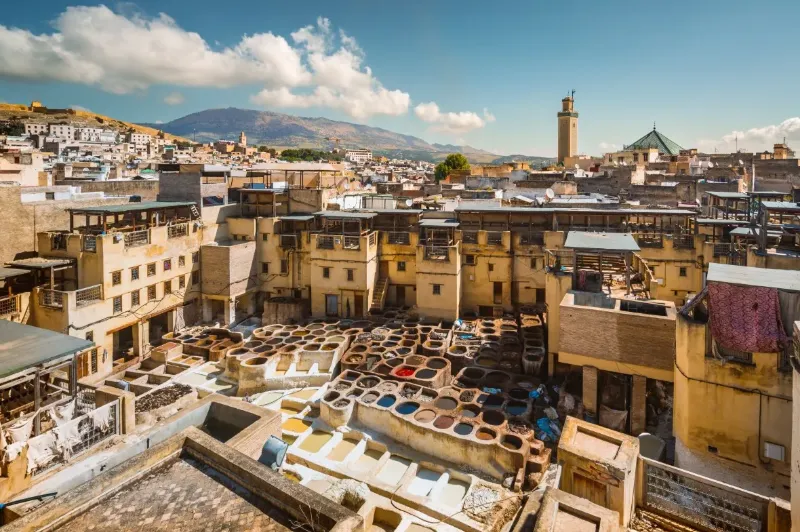
Although the distance between Fes and Merzouga is significant, the route offers several opportunities for scenic breaks. Depending on the schedule, travelers may stop in mountain towns, forested areas, or viewpoints overlooking valleys. Nevertheless, a realistic itinerary must account for driving time, lunch, rest stops, weather, and seasonal daylight so that the journey remains comfortable.
Tour from Fes :
Tour 2-Days From Fes To Desert Merzouga by Errachidia
Tour 3-Days from Fez to Marrakech via Ait Ben Haddou
Tour 5-Days from Fez to Marrakech via Merzouga desert
Tour 4-Days from Fez to Marrakech and Merzouga desert
Cross the Middle Atlas Mountains
The Middle Atlas Mountains offer a noticeable contrast to the busy streets of Fes. The landscape includes forests, open plateaus, agricultural areas, small towns, and broad mountain views. In addition, temperatures may be considerably cooler here than in Merzouga, particularly during winter, early spring, and late autumn.
An Atlas Mountains Tour can include sections of the Middle Atlas, High Atlas, or both, depending on the selected route. Travelers heading from Tangier to Merzouga usually cross the Middle Atlas first. Later, those continuing toward Marrakech may also travel through the High Atlas. As a result, one itinerary can introduce several mountain environments and communities.
Experience the Scenic Ziz Valley
As the journey continues south, the landscapes around the Ziz Valley provide a beautiful introduction to southeastern Morocco. The region is characterized by palm groves, rocky cliffs, traditional villages, cultivated land, and panoramic viewpoints. Moreover, the contrast between the green valley and the surrounding dry terrain creates some of the route’s most memorable scenery.
The Ziz Valley also shows how local communities have adapted agriculture and settlement patterns to a demanding environment. Therefore, the area offers more than an attractive photography stop. It provides insight into the relationship between water, farming, architecture, and daily life in southeastern Morocco before the journey continues toward Erfoud and Merzouga.
Arrive in Merzouga and Erg Chebbi
Merzouga is one of Morocco’s best-known desert gateways. The village lies near Erg Chebbi, a remarkable area of high dunes that changes color throughout the day. Reaching the desert after traveling through the Rif and Middle Atlas Mountains creates a powerful sense of arrival. Consequently, Merzouga is often the main highlight of a journey beginning in Tangier.
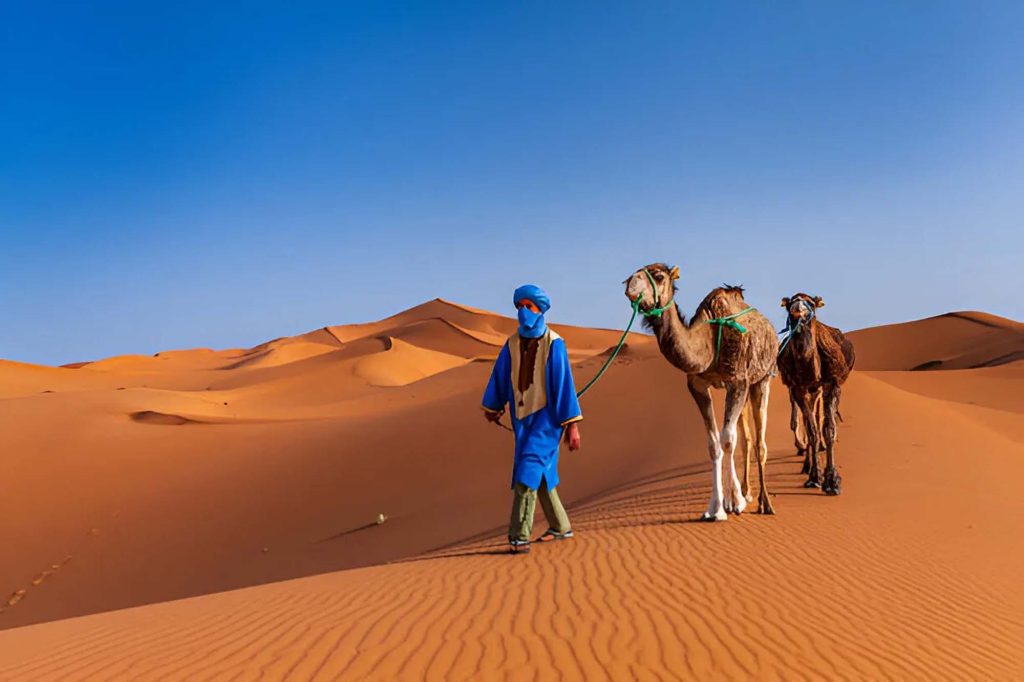
A Merzouga Desert Tour may include a dune excursion, sunset views, an overnight camp stay, local music, traditional meals, or a visit to communities around the desert. However, the precise activities vary according to the selected package. Travelers should therefore confirm the camp category, transportation method, meal plan, room type, and included experiences before booking.
Enjoy an Authentic Sahara Experience
A Sahara Desert Tour Morocco experience is not limited to seeing sand dunes. Although Erg Chebbi is the region’s most recognizable landscape, the surrounding area also includes rocky desert terrain, palm groves, seasonal waterways, villages, and local communities. Therefore, spending more time near Merzouga allows travelers to discover a broader and more authentic side of southeastern Morocco.
Moreover, the atmosphere changes significantly between daytime and evening. During the afternoon, the dunes may appear golden or orange, while sunset introduces deeper shadows and softer colors. After nightfall, the desert becomes quieter and the sky may appear exceptionally clear. As a result, an overnight stay offers a more complete experience than a brief daytime stop.
Try Camel Trekking Near Merzouga
A Camel Trekking Morocco experience is one of the best-known activities near Merzouga. Depending on the itinerary, travelers may ride across part of the dunes before sunset and continue toward a desert camp. Afterward, the evening may include dinner, traditional music, stargazing, and an overnight stay in a private tent.
However, camel riding is not required for every traveler. People with mobility limitations, back problems, health concerns, or personal reservations should discuss possible alternatives in advance. In many cases, camp transportation by a suitable vehicle may be available. Therefore, private planning helps ensure that the desert experience remains comfortable and appropriate for every guest.
Discover the Desert Beyond the Dunes
Although the dunes attract most of the attention, the wider Merzouga area offers additional experiences. A regional excursion may include rocky desert landscapes, panoramic viewpoints, local villages, seasonal lakes, nomadic areas, or cultural encounters. Furthermore, spending two nights in the region makes it possible to explore without immediately beginning another long driving day.
An additional night also provides greater flexibility if the weather changes. For instance, wind or reduced visibility may affect the planned sunset experience on one afternoon. Nevertheless, travelers with an extra day still have another opportunity to appreciate the dunes. Consequently, longer itineraries often provide a calmer and more rewarding desert stay.
Walk Through the Todra Gorge
After leaving Merzouga, many longer tours continue toward the Todra Gorge. Known for its tall rock walls and dramatic natural setting, the gorge provides a refreshing contrast to the open landscapes of the desert. Depending on the itinerary, travelers may stop for photographs, lunch, or a walk through the narrowest and most impressive section.
The surrounding area also includes palm groves, villages, mountain scenery, and traditional accommodation. Therefore, an overnight stay can provide more time to appreciate the valley beyond the main gorge. However, travelers following a shorter schedule may visit Todra as a scenic stop before continuing toward the Dades Valley or Ouarzazate.
Explore the Dades Valley
The Dades Valley is known for its cultivated areas, earthen villages, winding mountain roads, and unusual rock formations. In addition, the region connects the desert route with Ouarzazate and the High Atlas Mountains. Its varied scenery makes it a valuable addition to itineraries continuing from Merzouga toward Marrakech.
Rather than treating the valley as a quick transfer, travelers with sufficient time may stay overnight and explore the surroundings more slowly. Scenic viewpoints, village landscapes, and short walks can be included according to the season and available time. Consequently, the Dades Valley adds depth and variety to longer journeys across southern Morocco.
Travel Across the High Atlas Mountains
Travelers continuing toward Marrakech usually cross the High Atlas Mountains. The road passes through valleys, villages, high mountain areas, and wide viewpoints. However, mountain distances may take longer than expected because of winding roads, traffic, roadwork, and changing weather conditions.
Therefore, the itinerary should provide enough time for safe driving and scenic stops. During winter, snow or low temperatures may influence parts of the route, while spring often brings greener landscapes. Regardless of the season, crossing the High Atlas creates a memorable transition between the quieter southern regions and the lively city of Marrakech.
Visit the Historic Village of Ait Ben Haddou
An Ait Ben Haddou Tour is a popular addition to journeys between Merzouga and Marrakech. This historic fortified village is known for its earthen architecture and strategic position along an old travel route. Furthermore, its distinctive appearance has made it one of the most recognizable destinations in southern Morocco.
Visitors can walk through the village, observe traditional construction methods, and enjoy panoramic views from higher points. Nevertheless, some pathways are steep or uneven, so comfortable footwear is recommended. Because of its location, Ait Ben Haddou is easiest to include in tours continuing through Ouarzazate toward Marrakech rather than short round trips returning directly to Tangier.
Finish Your Journey in Marrakech
Marrakech can be an excellent finishing point for a private tour from Tangier. After traveling through mountain towns, historic cities, desert regions, valleys, and the High Atlas, visitors arrive in a city famous for its lively medina, gardens, palaces, markets, and traditional riads. Consequently, the energy of Marrakech creates an exciting contrast with the peaceful desert.
However, travelers should reserve enough time to explore the city rather than arriving late and departing early the following morning. Ideally, your schedule should include at least one complete day for Marrakech. A guided visit can introduce important monuments, whereas free time allows you to explore markets, restaurants, gardens, and public spaces independently.
Compare Northern and Southern Desert Routes
Marrakech Desert Tours generally cross the High Atlas Mountains before continuing toward Ouarzazate, the Dades Valley, and Merzouga or Zagora. In contrast, a desert journey from Tangier introduces Chefchaouen, Fes, and the Middle Atlas first. Therefore, each route reveals different landscapes and cultural destinations before reaching the desert.
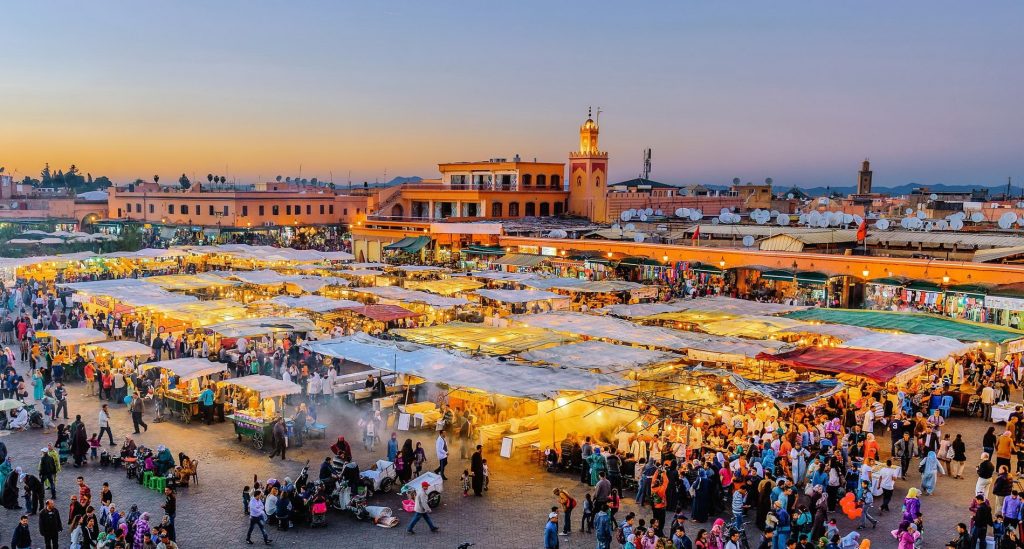
Similarly, Tours from Marrakech may be combined with a longer itinerary that begins in Tangier and ends in southern Morocco. Nevertheless, it is important to avoid repeating the same valleys and roads unnecessarily. A carefully designed one-way route allows travelers to experience more destinations while reducing backtracking and excessive driving.
Tour from Marrakech :
Tour 3-Days from Marrakech to Fez through Sahara
Tour 4-Days from Marrakech to Merzouga by Ouarzazate
Tour 4-Days from Marrakech to Fez and desert
Tour 6-Days from Marrakech to Desert Merzouga
Tour 7-Days from Marrakech to Fes by Ouarzazate
Add Casablanca to Your Itinerary
Casablanca Tours can be included before or after a desert journey when the available time and flight arrangements allow. Casablanca is Morocco’s largest city and an important economic center. Although it differs from the historic atmosphere of Fes or Chefchaouen, it offers Atlantic views, modern neighborhoods, notable architecture, and convenient international connections.
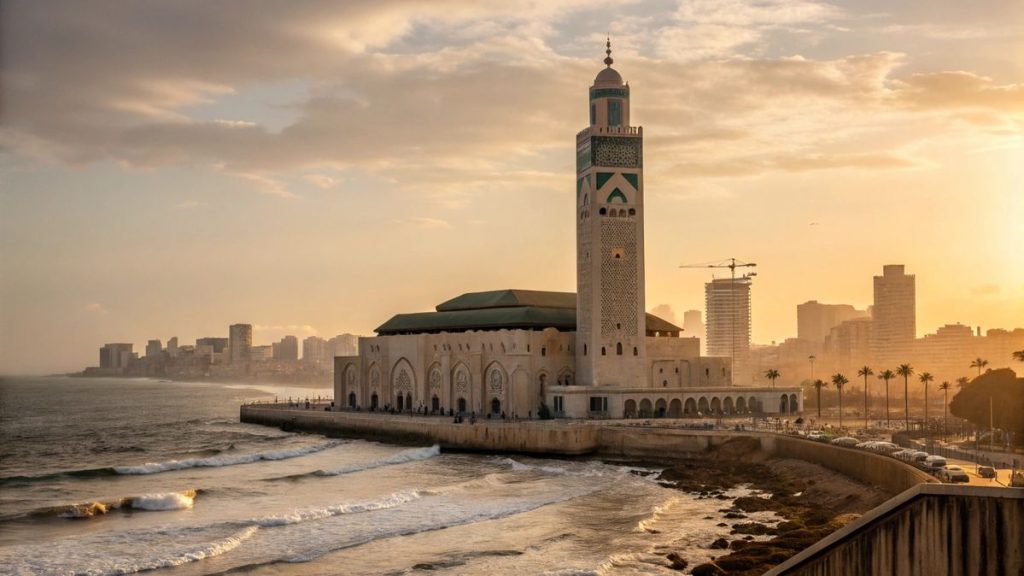
However, Casablanca is not located directly between Tangier and Merzouga. Adding it can therefore increase the total driving distance, particularly on a short itinerary. It is most practical for travelers arriving or departing through Casablanca or for longer journeys that also include Rabat and other destinations along the Atlantic corridor.
Tour from Casablanca :
Tour 6-Days Morocco Tour from Casablanca by Fes and Merzouga
Tour 7-Days Morocco Tour from Casablanca
Tour 9-Days Morocco Tour from Casablanca
Tour 8-Days from Casablanca to Fez Marrakech and desert
Tour 10-Days desert from Casablanca to Marrakech and Fez
Take a Day Trip to Ouzoud Waterfalls
An Ouzoud Waterfalls Day Trip is usually organized from Marrakech. The waterfalls are located in a scenic inland area and can be visited during a full-day excursion. Therefore, travelers who finish their desert journey in Marrakech may add Ouzoud after completing the main route from Tangier.
Nevertheless, the excursion requires additional road travel and should not be inserted into an already overloaded itinerary. If your schedule is limited, you may need to choose between more time in Marrakech and a visit to the waterfalls. On the other hand, adding an extra day creates a more comfortable experience without reducing the time allocated to Fes, Merzouga, or the Atlas Mountains.
Discover Morocco’s Cultural Heritage
Morocco Cultural Tours focus on history, architecture, craftsmanship, food, music, and local traditions. From Tangier’s international heritage and Chefchaouen’s mountain atmosphere to Fes’s historic workshops and the traditions of desert communities, each region contributes a different perspective. As a result, a north-to-south journey can become much more than a scenic road trip.
Guided visits are especially valuable in historic cities because important details may be easy to overlook. Moreover, cultural discovery requires enough time for observation, conversation, and respectful interaction. Instead of visiting many destinations briefly, travelers should prioritize the places that interest them most and explore those locations at a comfortable pace.
Add Adventure to Your Morocco Journey
Morocco Adventure Tours may combine road travel with hiking, cycling, mountain walks, dune exploration, or other outdoor activities. Because Morocco includes coastlines, forests, mountains, valleys, gorges, and desert landscapes, there are opportunities for different interests and fitness levels. Furthermore, a private itinerary makes it easier to select suitable activities for your group.
Nevertheless, adventure activities should always be planned according to weather, terrain, equipment, and physical condition. A short walk near the dunes is very different from a demanding mountain trek. Therefore, travelers should describe their experience honestly and discuss any mobility or health concerns before including challenging activities in the itinerary.
Upgrade to a Luxury Travel Experience
Luxury Morocco Tours emphasize premium accommodation, private transportation, personalized service, and carefully selected experiences. Depending on availability, travelers may stay in elegant riads, boutique hotels, high-quality guesthouses, or upgraded desert camps. In addition, a luxury itinerary often provides more time for rest and fewer rushed transfers.
However, luxury should not be measured by price alone. Location, privacy, service, authenticity, room quality, and route design are equally important. For example, a beautiful hotel far outside a historic center may make evening exploration difficult. Therefore, each property should be selected according to the overall experience rather than its category alone.
Choosing a Five- or Seven-Day Itinerary
A five-day tour may be suitable for travelers with limited time whose main priority is reaching Merzouga. However, Tangier and the desert are separated by a considerable distance. Consequently, a five-day route will include longer driving periods and less time in Chefchaouen, Fes, and the mountain regions.
A seven-day itinerary offers a better balance between sightseeing and transportation. Depending on the finishing city, it may include Tangier, Chefchaouen, Fes, the Middle Atlas, and Merzouga. Nevertheless, travelers should still prioritize their most important destinations. Adding too many stops may reduce the time available for guided visits, meals, photography, and rest.
Discover Morocco on a Ten-Day Tour
A ten-day journey provides more opportunities to experience Morocco at a comfortable pace. In addition to Tangier, Chefchaouen, Fes, and Merzouga, travelers may visit Todra Gorge, the Dades Valley, Ouarzazate, Ait Ben Haddou, or Marrakech. As a result, the itinerary can combine cultural discovery, natural scenery, and desert activities without requiring constant movement.
Furthermore, this duration allows additional time in key destinations. For example, you may spend a full guided day in Fes, stay two nights near Merzouga, or explore the southern valleys more slowly. Therefore, ten days is a practical choice for travelers who want a broad experience without committing to a full two-week vacation.
Travel for Twelve to Fifteen Days
A journey lasting between 12 and 15 days provides the greatest flexibility. Travelers can begin in Tangier, continue through Chefchaouen and Fes, reach Merzouga, cross the southern valleys, and finish in Marrakech or Casablanca. Depending on the route, Rabat, Meknes, Volubilis, or other destinations may also be included.
More importantly, an extended itinerary allows travelers to slow down. Instead of changing accommodation every night, they can spend additional time in selected cities and regions. Consequently, longer journeys are particularly suitable for couples, families, photographers, older travelers, and anyone who prefers deeper experiences over fast sightseeing.
Select Comfortable Accommodation
Accommodation may include hotels, traditional riads, family-run guesthouses, mountain lodges, kasbah-style properties, and desert camps. Each category provides a different atmosphere and level of comfort. Furthermore, room size, bathroom facilities, heating, air conditioning, accessibility, and location may vary significantly between destinations.
For this reason, travelers should communicate their expectations before booking. Couples may request a double room, friends may prefer separate beds, and families may need connecting rooms or family suites. Likewise, guests with limited mobility should ask about stairs and walking access. Suitable accommodation contributes greatly to the comfort of a multi-day journey.
Travel in a Comfortable Private Vehicle
Private transportation makes it easier to manage luggage, organize scenic stops, and travel between destinations that may be difficult to connect by public transport. The appropriate vehicle depends on the group size, route, and chosen comfort level. In addition, air conditioning and adequate luggage space are important during long road journeys.
Nevertheless, a private vehicle does not remove the geographical distances between Morocco’s regions. Some travel days will naturally be longer than others, particularly between Fes and Merzouga. Therefore, a reliable itinerary should explain the approximate pace before booking, allowing travelers to decide whether additional nights are necessary.
Taste Moroccan Food Along the Route
Food is an important part of a journey across Morocco. Depending on the destination, travelers may enjoy tagines, couscous, soups, grilled dishes, salads, fresh bread, dates, pastries, and mint tea. Moreover, ingredients and preparation styles can vary between northern cities, mountain regions, southern valleys, and desert communities.
Travelers with allergies or dietary restrictions should provide clear information in advance. Vegetarian meals are often available, but options may be more limited in remote areas. Furthermore, private transportation can offer greater flexibility when selecting restaurants, although meal stops still need to fit the daily route and available time.
Choose the Best Time to Travel
Spring and autumn are popular seasons for desert tours because temperatures are often comfortable across several regions. During these periods, travelers can generally explore medinas, cross mountain areas, walk through valleys, and enjoy the desert without the most intense summer heat. Nevertheless, conditions can still differ significantly between Tangier and Merzouga.
Summer temperatures may become extremely high near the desert, while winter evenings can be cold. Meanwhile, northern Morocco may receive rain, and the Atlas Mountains may experience snow or low temperatures. Therefore, travelers should prepare for regional differences and check current weather conditions shortly before departure.
Pack for Cities, Mountains, and Desert Regions
Comfortable clothing and practical footwear are useful throughout the journey. Because temperatures change between the coast, cities, mountains, valleys, and desert, light layers are generally the best option. In addition, travelers should consider bringing sunscreen, sunglasses, a sun hat, personal medication, charging equipment, and a small day bag.
For the desert, a scarf can help protect against wind and sand, while a warm layer may be necessary after sunset. Closed shoes are also useful in rocky and sandy areas. Furthermore, packing light makes luggage easier to manage when changing accommodation during a multi-day itinerary.
Respect Moroccan Culture and Local Communities
Morocco is welcoming to international visitors, but respectful behavior improves the travel experience. Modest clothing is recommended in rural communities and religious surroundings, while permission should be requested before photographing people. In particular, visitors should avoid taking close photographs of residents, artisans, musicians, or children without consent.
Responsible travel also means protecting the landscapes and communities you visit. Travelers can reduce waste, avoid unnecessary single-use products, and remain on established paths in fragile mountain and desert areas. Moreover, supporting local guides, accommodations, restaurants, and cooperatives helps tourism contribute to regional economies.
Travel as a Couple, Family, Group, or Solo Visitor
Private tours can be adapted to couples, families, groups of friends, and solo travelers. Couples may prefer scenic accommodation and relaxed evenings, while families often need frequent breaks, suitable rooms, and age-appropriate activities. Meanwhile, friends may organize the route around shared interests such as photography, culture, food, or outdoor exploration.
Solo travelers may choose a private tour for convenience, safety, and personalized planning. Although traveling alone may cost more than sharing services, it gives the traveler complete control over the itinerary. In every case, sharing expectations before booking helps create a route that matches the group’s interests, mobility, and preferred travel rhythm.
Select a Reliable Local Travel Company
A professional Morocco Travel Agency should offer clear communication, realistic itineraries, transparent prices, and written booking conditions. Before confirming your journey, ask about transportation, accommodation, meals, local guides, desert activities, entrance fees, and transfers. Furthermore, verify the payment schedule, cancellation policy, and procedure for itinerary changes.
Customer reviews can be helpful, but they should not be the only deciding factor. In addition, pay attention to how carefully the agency answers your questions and whether it explains long driving days honestly. A reliable company should help improve your itinerary rather than accept an unrealistic schedule simply to secure the reservation.
Compare Packages Before Booking
When comparing packages, focus on value rather than price alone. A cheaper offer may exclude guides, activities, meals, entrance fees, or centrally located accommodation. Conversely, a more expensive package does not automatically guarantee better planning. Therefore, travelers should compare the route, inclusions, hotel locations, transport quality, and service level carefully.
The most suitable package should reflect your available time and main interests. For example, travelers interested in architecture may prioritize Fes and Ait Ben Haddou, while those seeking nature may want more time in the mountains and desert. Consequently, a balanced itinerary often provides better value than a rushed program containing too many destinations.
Create a Custom Morocco Itinerary
Custom Morocco Tours are designed around individual travel requirements instead of a fixed group schedule. The planning process normally begins with your arrival date, departure point, number of travelers, available days, and essential destinations. Afterward, accommodation preferences, dietary needs, activity level, room arrangements, and transportation requirements can be considered.
However, customization should make the journey more comfortable rather than more crowded. Although private travel offers flexibility, geography and driving times still influence the route. Therefore, the best custom itinerary balances personal interests with realistic distances, suitable overnight stops, and enough time to appreciate each destination.
Prepare Before Confirming Your Tour
Before booking, review the itinerary day by day. Check where each night will be spent, how much driving is expected, and which destinations include guided visits. In addition, confirm whether breakfast, dinner, local guides, desert activities, entrance fees, airport transfers, and camp transportation are included.
You should also communicate any important requirements before making a payment. These may include food allergies, mobility concerns, child seats, room arrangements, luggage size, or flight details. As a result, the tour provider can identify potential issues early and recommend appropriate solutions.
Plan Your Private Tangier Desert Tour
Tangier desert tours connect many of Morocco’s most memorable destinations within one carefully organized journey. Beginning in the north, travelers can explore Tangier, the Rif Mountains, Chefchaouen, Fes, the Middle Atlas, Merzouga, the Sahara, mountain valleys, and historic villages. Moreover, longer routes may continue through the High Atlas toward Marrakech or finish in Casablanca.
Whether you are planning a short desert escape or a complete journey lasting up to 15 days, the itinerary can be adapted to your schedule, interests, and preferred comfort level. Contact us with your travel dates, group size, essential destinations, and arrival and departure details. We can then create a private, flexible, and coherent route designed around your ideal Moroccan experience.